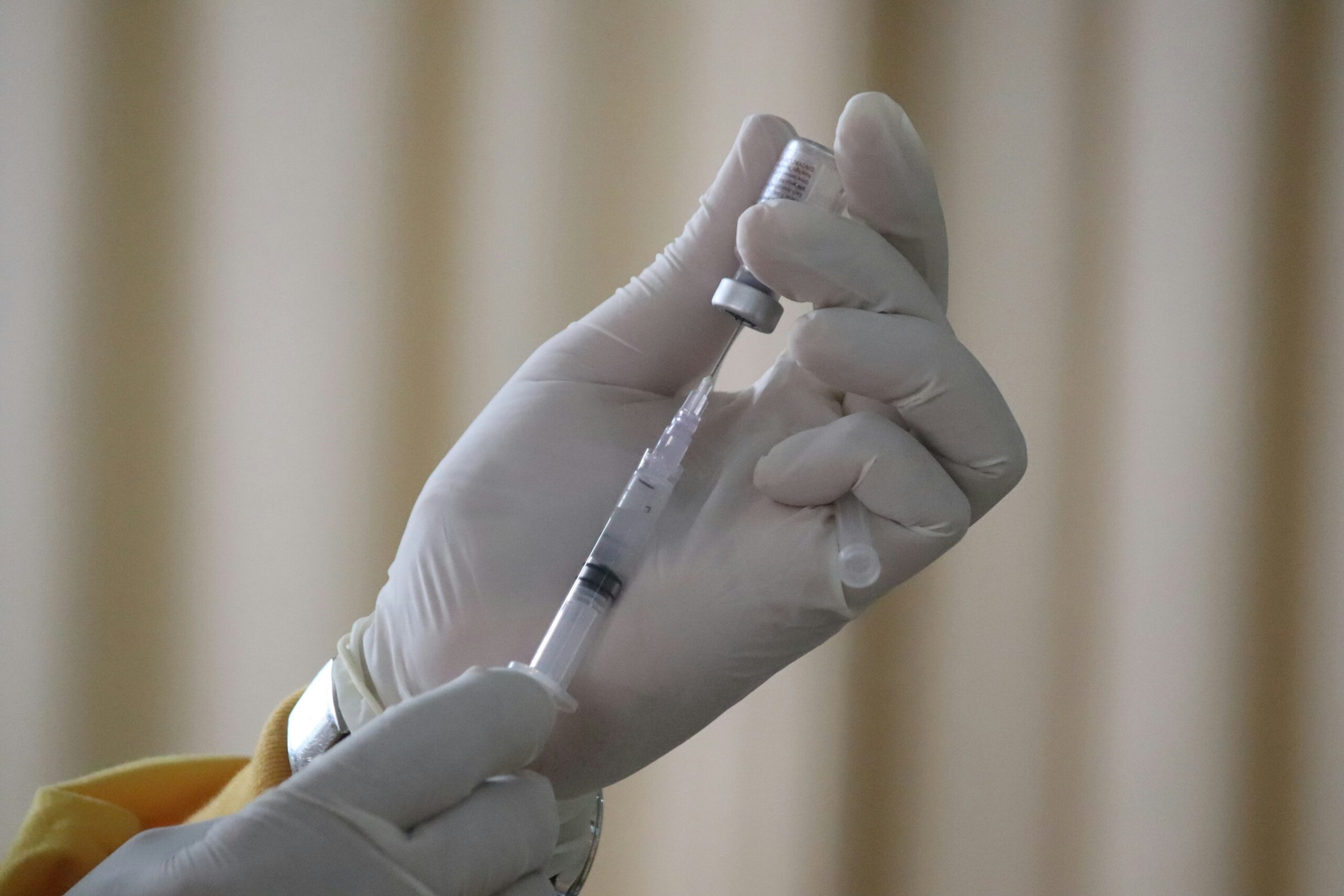

One of the most important things for travel — yet one of the easiest to forget — is vaccinations.
The problem with infectious diseases is that many travelers only realize how important vaccines are after they get sick. And by then, it may already be too late.
Some vaccines:
- Can be difficult to obtain depending on the country
- Require multiple doses over several months
So it’s important to plan ahead before your trip.
Especially for long-term travel and backpacking, many people end up saying, “I wish I had gotten vaccinated earlier.”
In this guide, I’ll explain which vaccines are important for travelers and how to get them more cheaply.
Table of Contents
🌍 Travel Vaccination Guide (By Region, Importance, and Number of Doses)
① Basic Vaccines Recommended Worldwide
These are vaccines you should check before any international trip.
💉 MMR (Measles, Mumps, Rubella)
🌍 Target: Worldwide
💉 Doses: 2 doses
⚠️ Key info: Measles outbreaks still occur internationally. Highly contagious (airborne transmission)
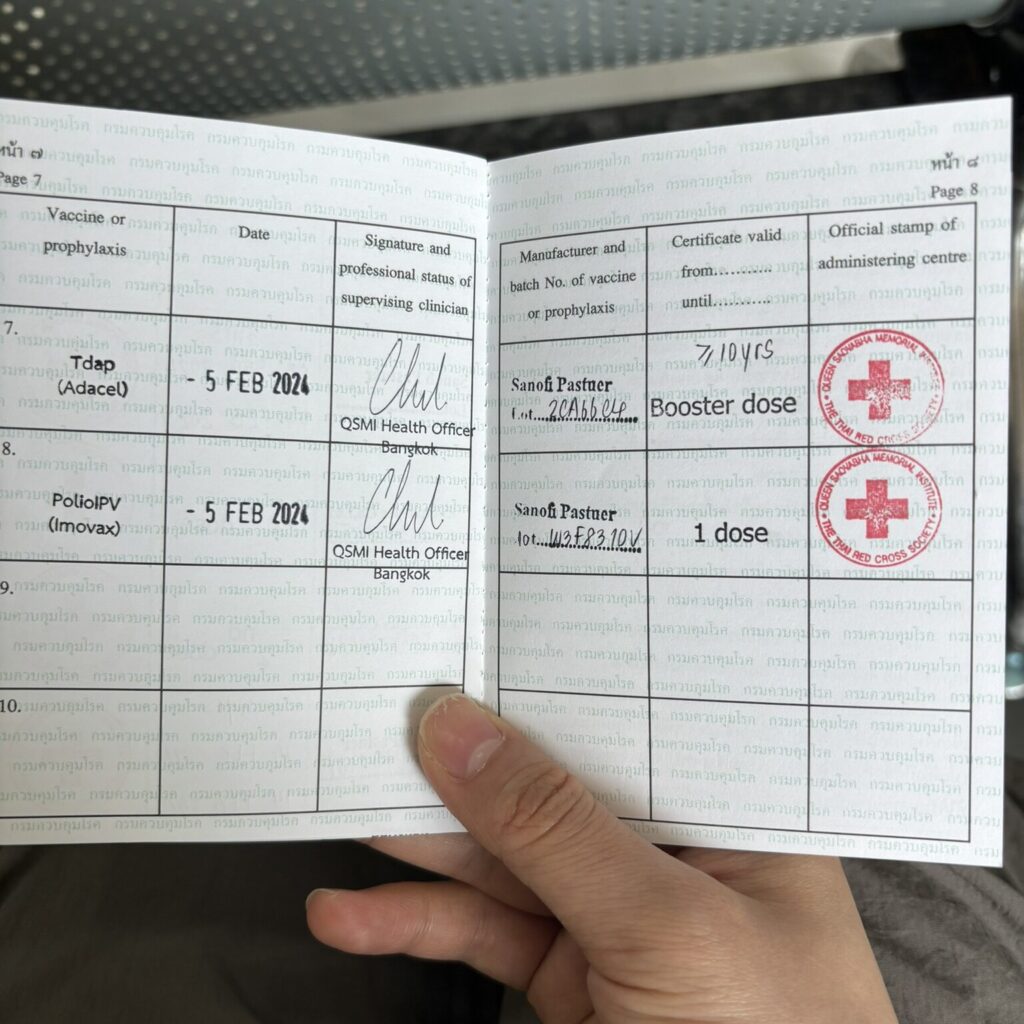
💉 DPT (Diphtheria, Tetanus, Pertussis)
🌍 Target: Worldwide
💉 Doses: Booster every 10 years
⚠️ Key info: Tetanus can enter through even small wounds (cuts, dirt, animal bites)
💉 Polio
🌍 Target: Parts of Africa and the Middle East
💉 Doses: 3 basic doses + booster
⚠️ Key info: Recommended for travel to polio-endemic regions due to risk of paralysis.
② Strongly Recommended for Travelers
These are especially important for long-term travel or developing countries.
💉 Hepatitis A
🌍 Target: Asia, South America, Africa
💉 Doses: 2 doses (0, 6 months)
⚠️ Key info: Spread through contaminated food and water. High risk in developing countries and backpacker travel
💉 Hepatitis B
🌍 Target: Worldwide (higher risk in Asia, Africa, and parts of South America)
💉 Doses: 3 doses (0,1,6 months)
⚠️ Key info: Spread through blood, sexual contact, and medical procedures. Can become chronic and cause liver disease
💉 Typhoid
🌍 Target: South Asia, Southeast Asia, Africa
💉 Doses: 1 shot or oral 4-dose course
⚠️ Key info: Spread through food, water, and ice
③ Region-Specific Vaccines / Entry Requirement Vaccines
🟡 Yellow Fever
Essentially the only internationally required vaccine.
🌍 Target: Central and West Africa Amazon regions of South America (Example: Northern Brazil, Peru and Bolivia (Amazon region), Tanzania, Kenya)
💉 Doses: 1 dose (valid for life)
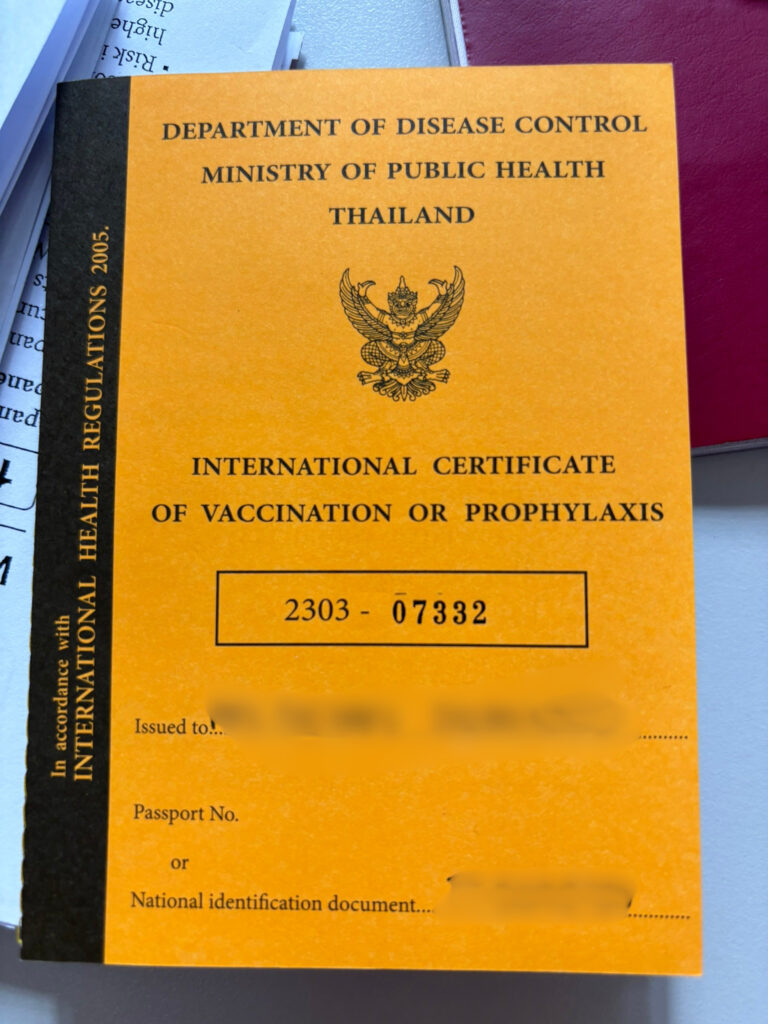
⚠️ Key info: Some countries require an “International Certificate of Vaccination” (Yellow Card) upon entry or transit. Can cause severe illness with high mortality in some cases
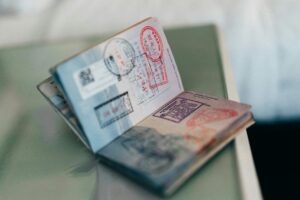
⚠️ Do Not Lose Your Vaccination Certificate
After receiving the yellow fever vaccine, you’ll get an international vaccination certificate called the “Yellow Card.” Some countries may ask to see it at immigration, and losing it can become a major hassle. Keep it as carefully as your passport.
🐶 Rabies (Extremely Important)
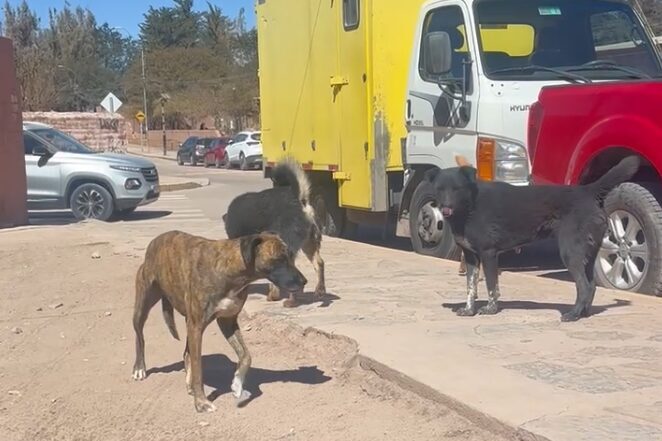
Personally, I think the rabies vaccine is almost essential if you’re backpacking long-term outside developed countries. In many developing countries, stray dogs are often unvaccinated and can be dangerous. Rabies is especially terrifying because once symptoms appear, the fatality rate is nearly 100%.
And it’s not only dogs. You can also be exposed through contact with: Monkeys, Bats, Cats, Squirrels
🌍 Target: Asia, Africa, South America
💉 Doses: 2–3 doses depending on the vaccine type and schedule
⚠️ Extremely Important Points
Even if you’ve had pre-exposure vaccination, you still need additional treatment if bitten.
The problem is that:
- Vaccines may not be available locally
- Medical care may be limited in some regions
- Post-exposure treatment may not be available in time
Because rabies is almost always fatal after symptoms begin, I strongly recommend getting vaccinated before traveling.
👉 I personally went through rabies vaccination after being bitten by a stray dog, and it made me realize how serious the risk really is when traveling. Read more here.
🦟 Japanese Encephalitis
This disease is spread by mosquitoes. If you’re planning long stays in rural areas, it’s worth considering.
🌍 Target: Southeast Asia, South Asia, Rural areas
💉 Doses: 2 doses (0, 28 days), Booster may be needed
⚠️ Key info: Can cause severe brain inflammation (encephalitis) in rare cases. Risk is higher in rice-farming areas and during rainy seasons
💉 Meningitis (Meningococcal Vaccine)
A fast-moving bacterial infection that causes inflammation of the brain and spinal cord lining, and can become life-threatening within hours.
🌍 Target: Sub-Saharan Africa, Saudi Arabia (pilgrimage requirements)
💉 Doses: 1 dose (valid for about 5 years)
⚠️ Key info: Spread through respiratory droplets (coughing, close contact, crowded places) Can become severe very quickly (medical emergency)
🦟 Malaria (Extremely Important)
Malaria is not prevented by a vaccine for most travelers. Instead, prevention relies on:
- Preventive medication
- Mosquito protection
In Africa especially, malaria can be life-threatening.
🌍 Target: Africa, The Amazon region of South America, Southeast Asia, South Asia
⚠️ Common Misconceptions: Many people assume cities are automatically safe, but that’s not always true. Risk increases significantly in: Wetlands, Rainy seasons, Jungle areas
💉 Doses: No vaccine (preventive medication required instead)
💊Preventive Medication
Common options include:
Malarone: Start 1–2 days before entering the risk area, continue daily during travel, and keep taking it for 7 days after leaving
Mefloquine: Taken once a week and suitable for long trips, but may cause side effects such as insomnia or anxiety. It should be started 1 week before entering the risk area and continued for 4 weeks afterward
Because these medications can have side effects, consult a doctor before taking them.
🦟Mosquito Protection
Very important. All help reduce risk.
Long sleeves
Insect repellent
Mosquito nets
DEET-based spray
☠Why Malaria Is Dangerous
Early symptoms often resemble: A cold, The flu, Food poisoning. Which makes it easy to miss. Many travelers think they “just have a fever” before discovering it’s malaria. If you’re heading to Africa, the Amazon, or remote areas of Southeast Asia, take it seriously.
🌏 Regional Summary
| Reagion | Recommended | Important |
| Asia | Hepatitis A, Typhoid, Rabies, Japanese Encephalitis | |
| Africa | Hepatitis A, Hepatitis B, Typhoid, Meningitis | Yellow Fever, Rabies, Malaria prevention |
| South America | Hepatitis A, Typhoid | Yellow Fever, Rabies, Malaria prevention (Amazon region) |
| Europe / Developed Countries | MMR, Tetanus (Usually, no special travel vaccines are needed.) |
💰How to Get Travel Vaccines Cheaply
Travel vaccines can be expensive. Getting everything may cost anywhere from several hundred to over 800 USD.
① Get Vaccinated in Thailand
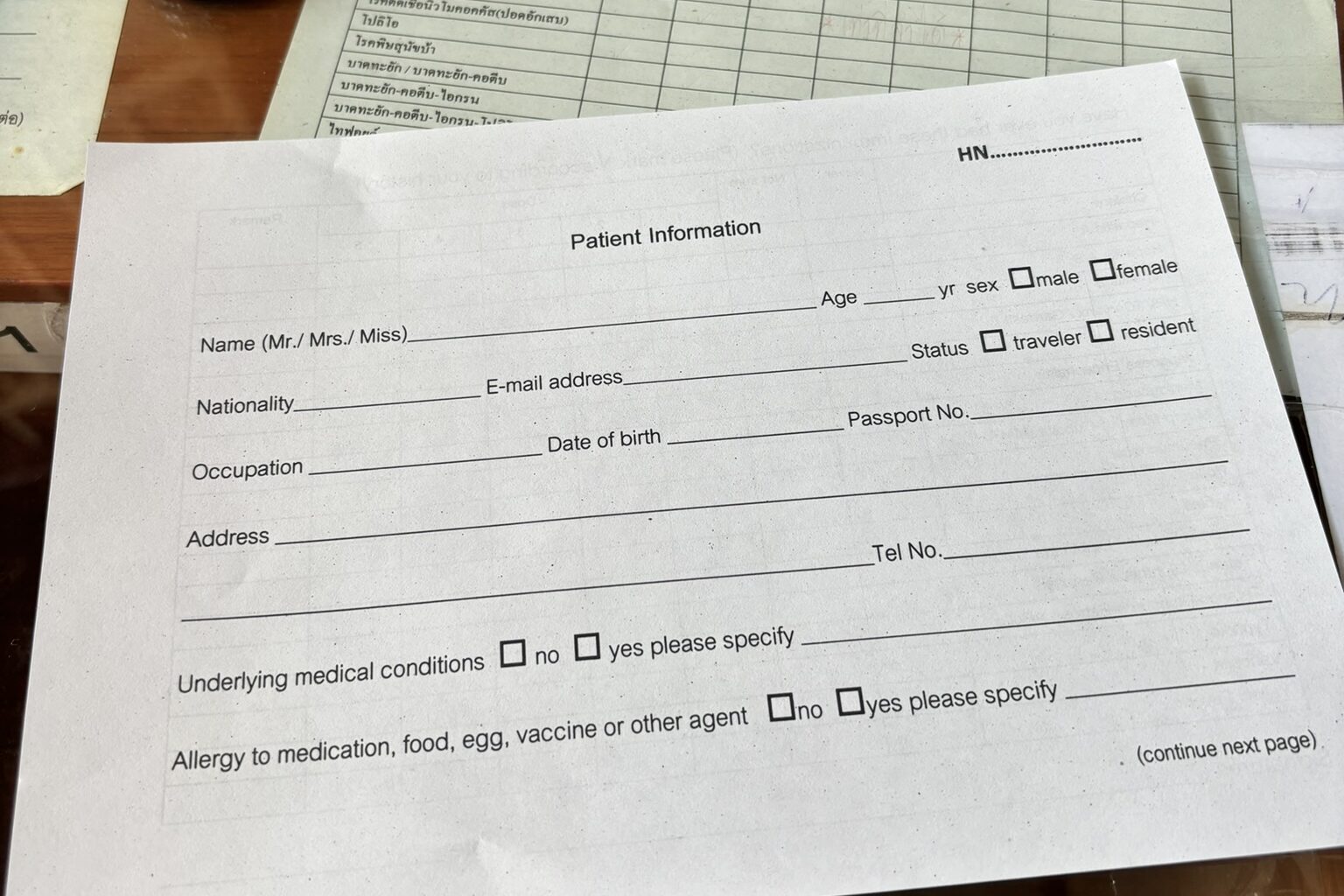
Among Japanese backpackers, there’s a common strategy:
“Start your trip in Thailand, get vaccinated there, then continue traveling.”
And honestly, it’s much cheaper. I personally got vaccinated in Bangkok, and some vaccines cost about one-third of the price in Japan.
📍Snake Farm (Bangkok)

This place is famous among backpackers. They’re used to foreign travelers, and the process is relatively smooth as long as you bring cash and your passport.
⏱Opening Hours
- Mon–Fri: 8:30–12:00 / 13:00–16:00
- Sat: 8:30–12:00
- Closed on Sundays and public holidays
The clinic closes during lunch from 12:00 to 13:00 on weekdays.
💉Vaccines I Personally Received in Thailand
I completed rabies and Hepatitis A,B beforehand in Japan because they require multiple doses.
- Yellow Fever
- Japanese Encephalitis
- Typhoid
- Oral Cholera (2 doses)
- DPT Combination Vaccine
- Inactivated Polio
- Meningitis
Including consultation fees, the total cost was about 8,200 THB (around 250 USD).
Before traveling to Africa, I also obtained a 3-week supply of Malarone from another clinic.
I visited the📍Thai Travel Clinic at Mahidol University’s Faculty of Tropical Medicine.
This place is also very popular among travelers, and the process was smooth.
⚠️ Important Notes
Some vaccines require schedules like: Second dose after 1 month, third dose after 6 months. So if you wait until right before departure, you may not finish in time. Plan early. Also, some clinics limit how many vaccines can be given in one day, so check in advance.
② Check for Local Government Subsidies
Some local governments partially cover vaccine costs. For example, in Japan, people without immunity may qualify for free MR (Measles-Rubella) vaccination.
③ Prioritize If You’re on a Budget
Ideally, you’d get everything. But for long-term travelers, cost can become a serious issue. Personally, my priority order would be:
- Tetanus
- Hepatitis A
- Rabies
- Yellow Fever (if required)
- Typhoid
⚠️ Final Thoughts
Travel is full of diseases that people only regret ignoring after they get sick.
Especially rabies and yellow fever. “This probably won’t happen to me.” That mindset doesn’t work.
Saving a few hundred dollars is not worth risking your life. If you’re planning long-term travel or backpacking, make sure to prepare properly before you leave.