
※ We usually take the cheapest buses possible, so please read this as advice from budget backpackers.
Table of Contents
Essential Tips for Taking Buses in South America
1. Safety Tips
Long-distance buses in South America are incredibly useful, but basic safety awareness is very important. We personally didn’t experience any major problems, but we were always extra careful.
Things we always did:
- Keep bags close to you instead of putting them in the overhead compartment
- Lock bags whenever possible
- On night buses, hide valuables like passports, wallets, and phones under your clothes or close to your body
- When checking luggage underneath the bus, make sure it is actually loaded
- Don’t completely let your guard down while sleeping
Most travelers never experience any problems. But at the same time: “Careless travelers are easier targets.” So honestly, being slightly paranoid is probably the right balance.
2. Buying Bus Tickets at the Terminal Is Often Better
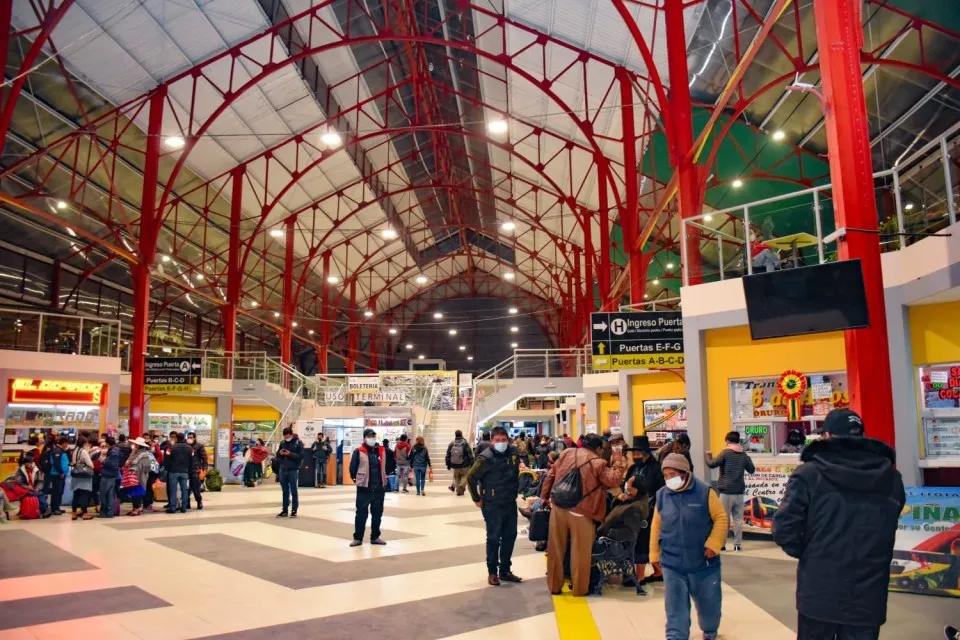
In South America, buying tickets directly at the bus terminal is often cheaper than booking online. And the most important thing: Always compare multiple bus companies. The price differences can be shocking. We’ve seen cases where: same route, same day, same departure time… but prices differed by almost 50 USD. Even stranger: different counters of the same company sometimes have different prices. At one terminal, the south-side counter and east-side counter gave us different prices for the exact same bus. South America really rewards people who walk around and compare prices in person.
Country-by-Country Bus Travel Guide
🇨🇱 Bus Travel in Chile
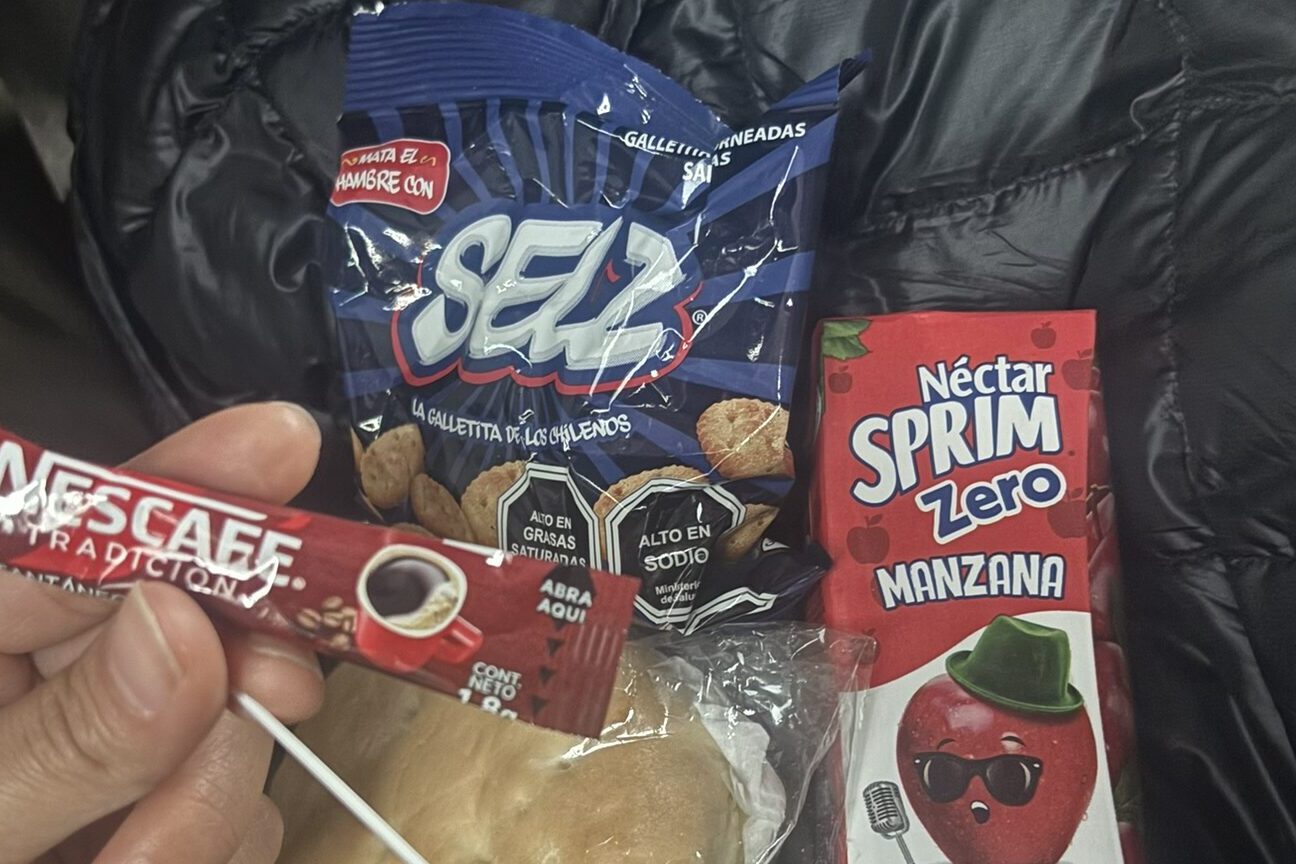
Overall, Chile was very comfortable. We took a roughly 10-hour bus from Punta Arenas, Chile to Ushuaia, Argentina. The bus came with a sandwich snack, regular toilet breaks, USB charging, and Starlink internet access. Honestly, it was pretty great.
Crossing the border was also straightforward as long as you followed the bus company’s instructions. Chile is probably one of the easier countries for first-time South America travelers.
And one underrated thing: bus terminal toilets are usually free. That’s surprisingly rare in South America.
⚠️Important Food Restrictions at the Chile–Argentina Border
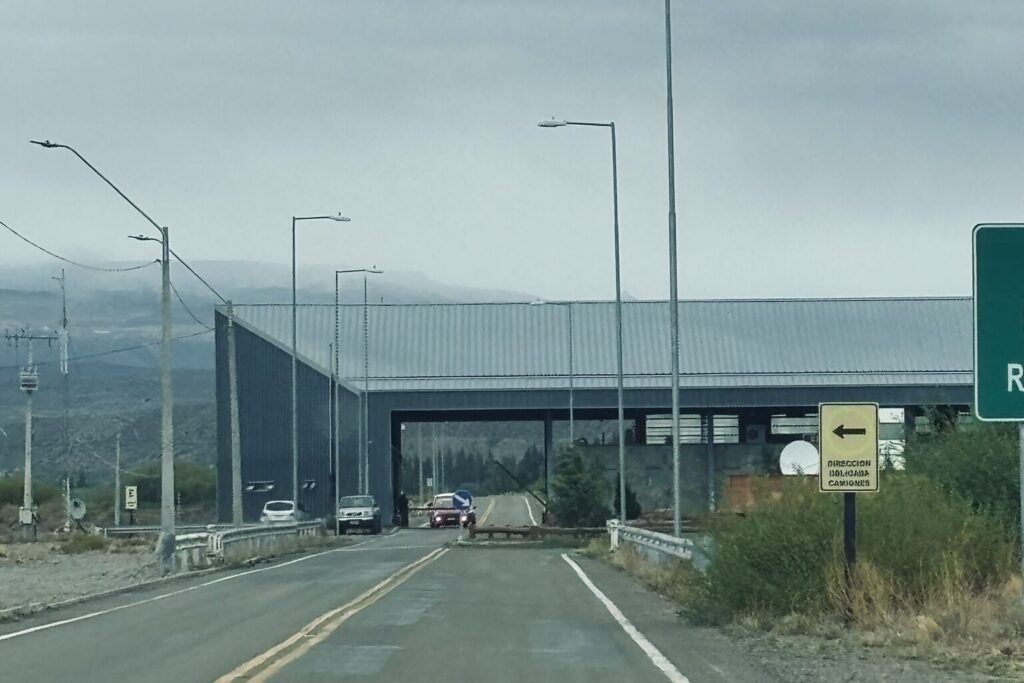
When crossing the border between Chile and Argentina, certain foods are prohibited, including fruits, vegetables, meat products, ham, cheese, and other animal-derived products such as honey.
Chile is especially strict about this. There are often baggage inspections and declaration checks on buses, so be careful when buying snacks before crossing the border. If you accidentally carry restricted food, it may be confiscated on the spot.
🇦🇷 Bus Travel in Argentina
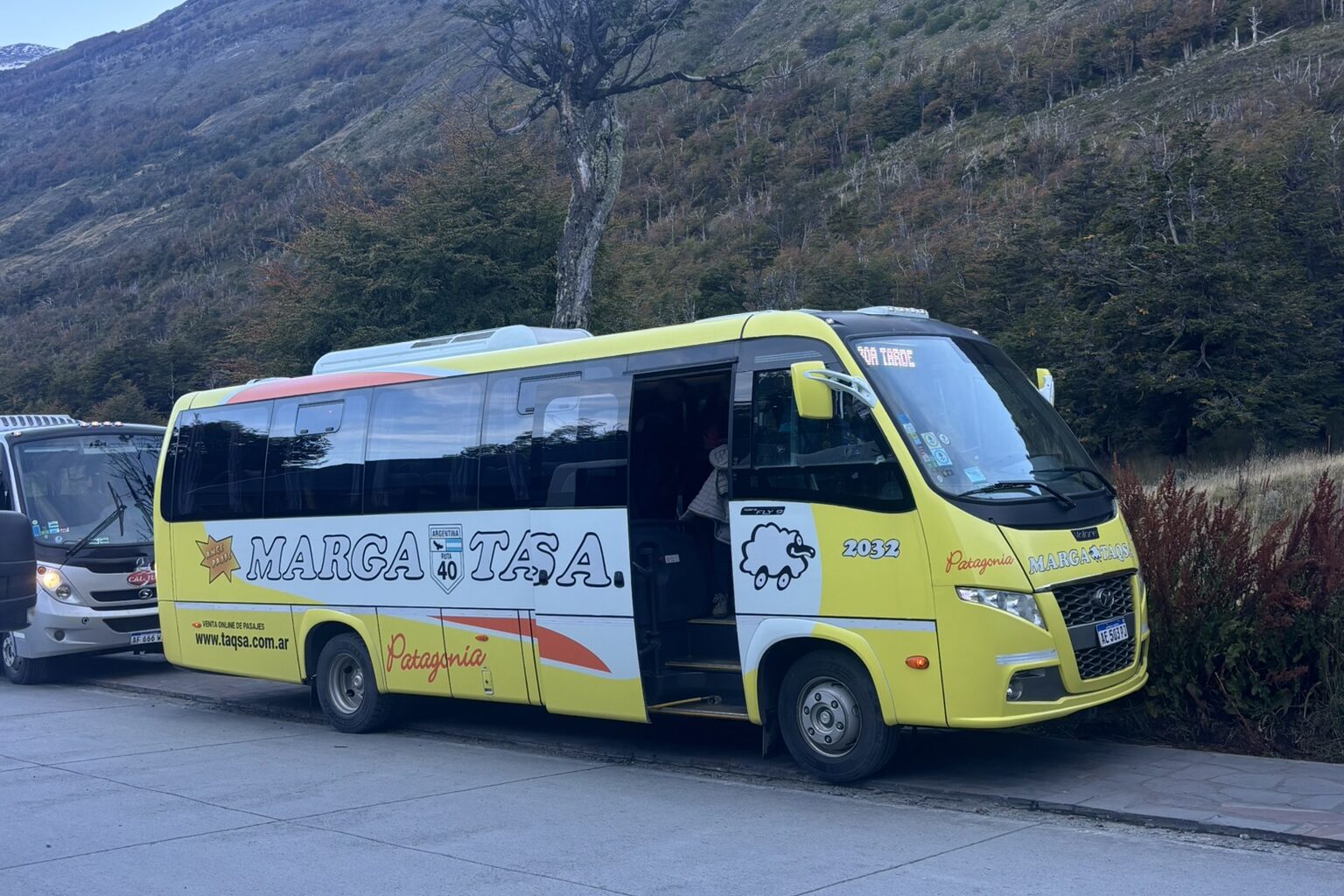
Argentina was also generally very good. Many buses offered Starlink internet and USB charging, making long journeys much more comfortable. And thankfully, bus terminal toilets are often free in Argentina as well.
⚠️Be Prepared for Limited Toilet Stops
Toilet breaks are basically nonexistent!! 14 hours. 18 hours. No stops. There is usually a toilet onboard, but no toilet paper and no running water is extremely common. So I highly recommend bringing water, food, toilet paper (baby wipes are useful).
Also, some luggage staff may ask for tips when loading bags underneath the bus, so carrying small cash is useful.
Border crossings are usually easy if you simply follow the bus company’s instructions.
🇧🇴 Bus Travel in Bolivia
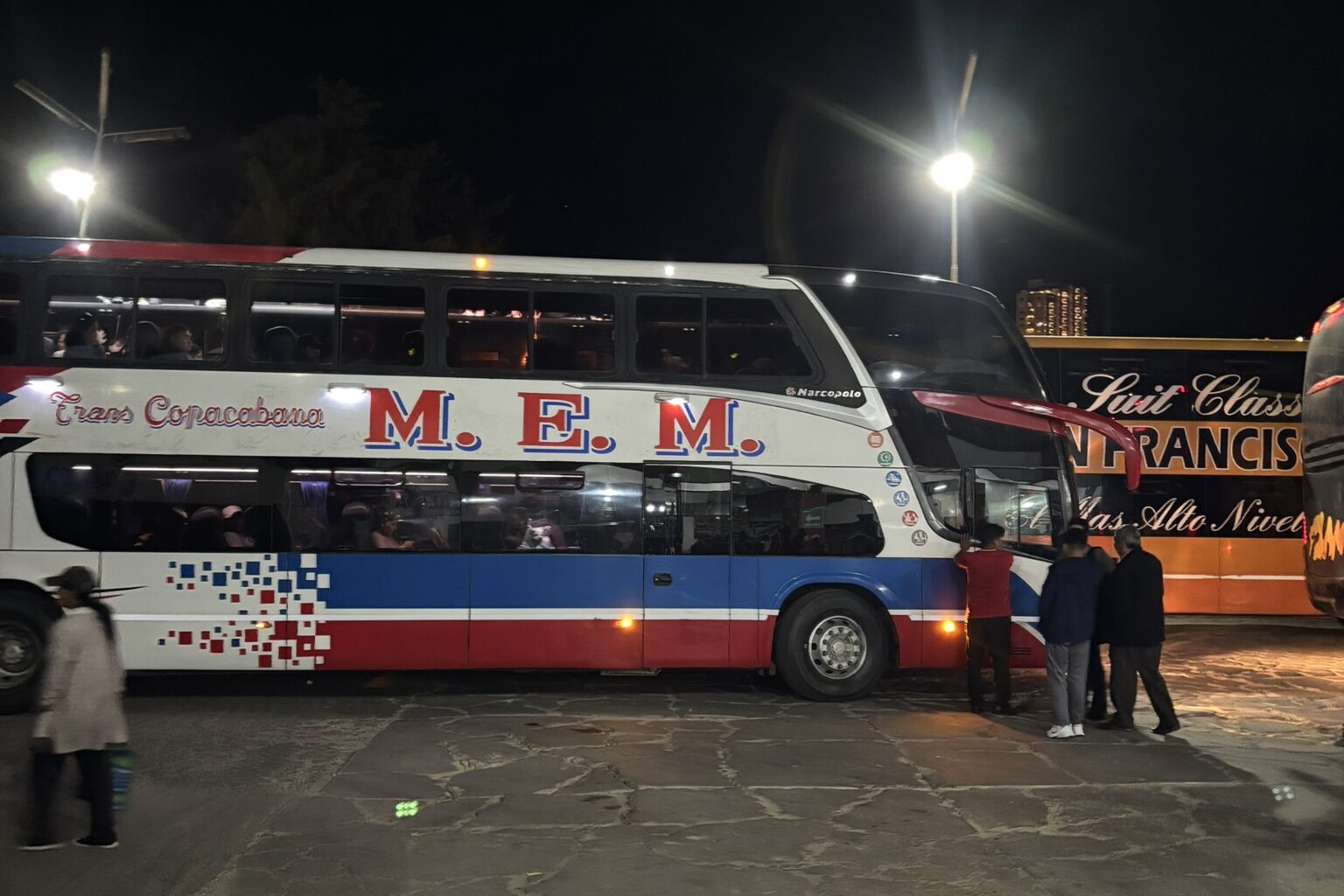
This is where South America suddenly feels very… South American. First: no Starlink, USB chargers may or may not exist, and even if they exist, they may not work.
There’s Also a “Bus Tax”
In Bolivia, there is sometimes a small terminal tax separate from the bus ticket, usually around 2 BOB. Sometimes you pay onboard, sometimes at the terminal. The problem is the lines can be ridiculously long. And sometimes you cannot board without paying first.
High-Altitude Bus Rides Can Be Tough
Bolivian buses often involve 4000m+ altitude, mountain roads, and sharp curves. Motion sickness is very possible. And if you already feel bad from the altitude… it can become brutal. So if you’re sensitive to motion sickness, bring motion sickness medicine, water, and snacks.
⚠️Be Prepared for Limited Toilet Stops
Toilet breaks are basically nonexistent! Yes, there’s usually a toilet onboard, but it’s mostly only available on night buses. So definitely bring water, food, and toilet paper (baby wipes recommended).
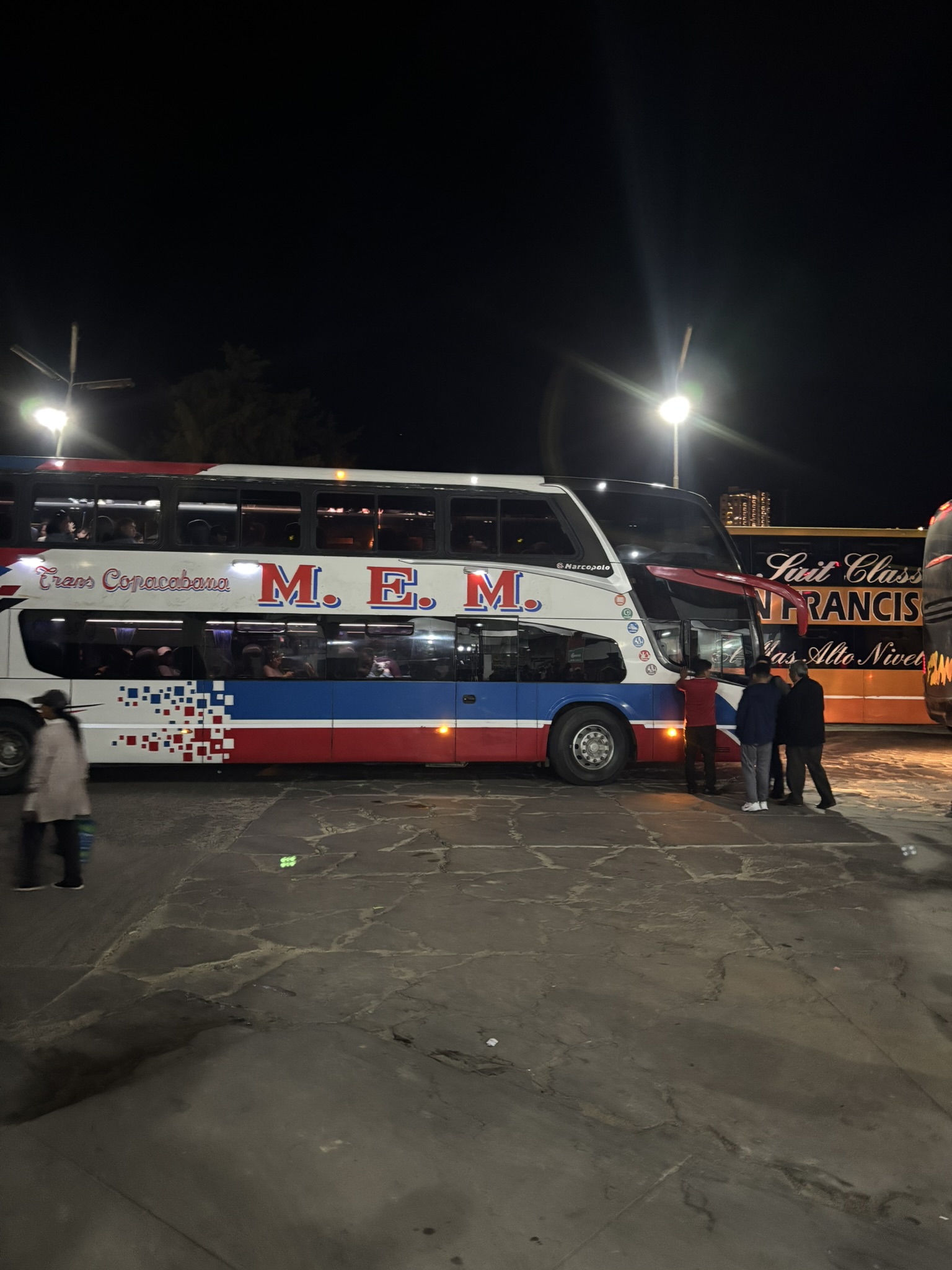
⚠️The Scariest Part…Buses Sometimes Leave BEFORE Departure Time!!
This genuinely happens. We once arrived at the terminal 30 minutes before departure… and the bus was already leaving. We literally had to run after it. And Bolivian drivers often don’t check whether all passengers are onboard. They will simply leave. Seriously. Seeing passengers banging on closed bus doors and shouting at the driver’s window is honestly pretty common. At this point, it almost feels like part of the culture. So in Bolivia: arriving 1 hour early is the safest strategy.
⚠️I Don’t Recommend Booking Online in Bolivia
A couple we met booked online and already paid… but when they arrived at the terminal, the bus literally did not exist. They ended up buying completely new tickets at the station. So at least for now: buying in person feels much safer in Bolivia.
🇵🇪 Bus Travel in Peru
Long-distance buses in Peru are relatively comfortable compared to other countries in South America. Most major bus companies offer reclining seats and USB charging ports, making long journeys more manageable.
Terminal Fees
At some bus terminals in Peru, you may need to pay a terminal fee. The payment location varies depending on the terminal, but it is usually paid at a counter inside the terminal or near the boarding gates. The fee is generally around 2.5 soles, although it can vary by location.
⚠️Checking In Your Luggage Before Boarding
Depending on the terminal and bus company, large backpacks and suitcases may need to be checked in before boarding.
The general process is as follows: you go to the bus company’s counter 30 minutes to 1 hour before departure and leave your large luggage there. You will receive a luggage claim ticket (a small receipt or half-ticket) in exchange. When you arrive at your destination, you can collect your luggage by showing this ticket. Make sure to keep the luggage claim ticket safe, as you will need it to pick up your belongings.
⚠️Safety Considerations
Some long-distance routes, such as the route between Lima and Cusco, have experienced bus robberies and hijacking incidents in the past. Before traveling, it is recommended to check the latest safety information and choose a reliable bus company.
🇪🇨 Bus Travel in Ecuador
Long-distance buses in Ecuador are also relatively comfortable compared to other countries in South America. Most buses have USB charging ports, and one of the main differences is that they often include toilet breaks and meal stops during the journey.
⚠️Pickpocketing Prevention
However, pickpocketing on buses is relatively common in Ecuador, so it is important to be careful with your belongings.
Avoid placing bags containing valuables in the overhead luggage compartment. Keep smaller bags on your lap or place your backpack at your feet and secure it with your legs. Especially on overnight buses, avoid leaving your phone or wallet in an easily accessible place while sleeping. Store valuables deep inside your bag or somewhere that is difficult for others to reach.
Final Thoughts
Very roughly speaking:
🇨🇱 Chile: Very comfortable
🇦🇷 Argentina: Comfortable, but no rest stops even on long-distance routes
🇧🇴 Bolivia: Buses may depart earlier than scheduled
🇵🇪 Peru: Luggage may need to be checked in at the counter before boarding
🇪🇨 Ecuador: Watch out for pickpockets
But honestly… that unpredictability is also part of what makes backpacking in South America so memorable. So enjoy, and have a safe bus trip!