Table of Contents
Introduction
Alongside the famous Salkantay Trek, the Colca Canyon Trek is one of Peru’s most spectacular multi-day hikes.
Located near Arequipa, Colca Canyon is one of the deepest canyons in the world, offering a completely different landscape from the snow-capped mountains around Huaraz and Cusco. Dry desert-like cliffs, dramatic canyon walls, lush green oases hidden deep in the valley, natural hot springs, and wild Andean condors — the biggest attraction of this trek is the incredible variety of landscapes you experience within just a few days of hiking.
We completed the trek independently without joining a tour, spending 3 days and 2 nights hiking through the canyon.
In this guide, I’ll share everything you need to know about the Colca Canyon Trek, including the route, accommodation, costs, and our personal experience hiking the trail.
Colca Canyon Trek Overview
| Item | Details |
|---|---|
| Duration | 3–4 days |
| Distance | Approximately 28–40 km (depending on the route) |
| Highest Elevation | Around 3,287 m (Cabanaconde) |
| Lowest Elevation | Around 2,200 m (Sangalle Oasis area) |
| Total Elevation Gain | Approximately 1,800 m+ |
| Difficulty | Moderate to challenging |
| Accommodation | Guesthouses in Llahuar, Sangalle, San Juan de Chuccho, and other villages |
| Best Season | May–October (dry season) |
How Deep Is Colca Canyon?
Colca Canyon reaches a maximum depth of over 3,200 meters, making it one of the deepest canyons in the world.
The trek begins with a dry, desert-like landscape surrounded by rocky cliffs. As you descend deeper into the canyon, the scenery gradually transforms into green river valleys, fruit orchards, natural hot springs, and finally the famous oasis villages hidden at the bottom.
Colca Canyon Trek Route Map & Itinerary
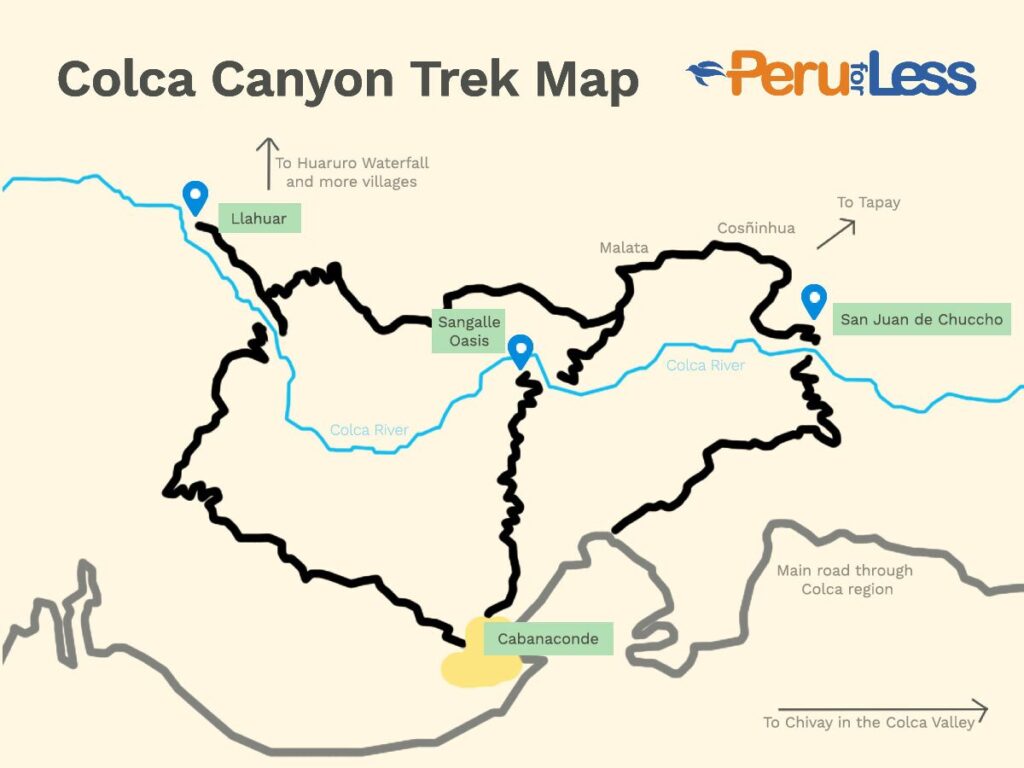
We completed the Colca Canyon Trek as a self-guided 3-day, 2-night trek.
The classic route starts from Cabanaconde, descends into the canyon, passes through villages such as Llahuar, Sangalle, and San Juan de Chuccho, and eventually climbs back up to Cabanaconde.
However, there is no single fixed route. One of the great things about this trek is that you can customize your itinerary depending on your fitness level, available time, and preferences.
Total Route Summary
| Day | Route | Distance | Elevation |
| Day 1 | Cabanaconde → Llahuar | 12.6 km | -1,000 m |
| Day 2 | Llahuar → Sangalle | 9.5 km | +800 m |
| Day 3 | Sangalle → Cabanaconde | 6 km | +1,000 m |
Total distance: Approximately 28 km
During these three days, you experience everything that makes Colca Canyon special:
- Incredible viewpoints from above the canyon
- Traditional life in remote villages
- A hidden oasis deep in the valley
- The challenging final climb back to the top
We followed the route clockwise, but hiking in the opposite direction is also possible.
The Trek
Day 0: Getting to Cabanaconde
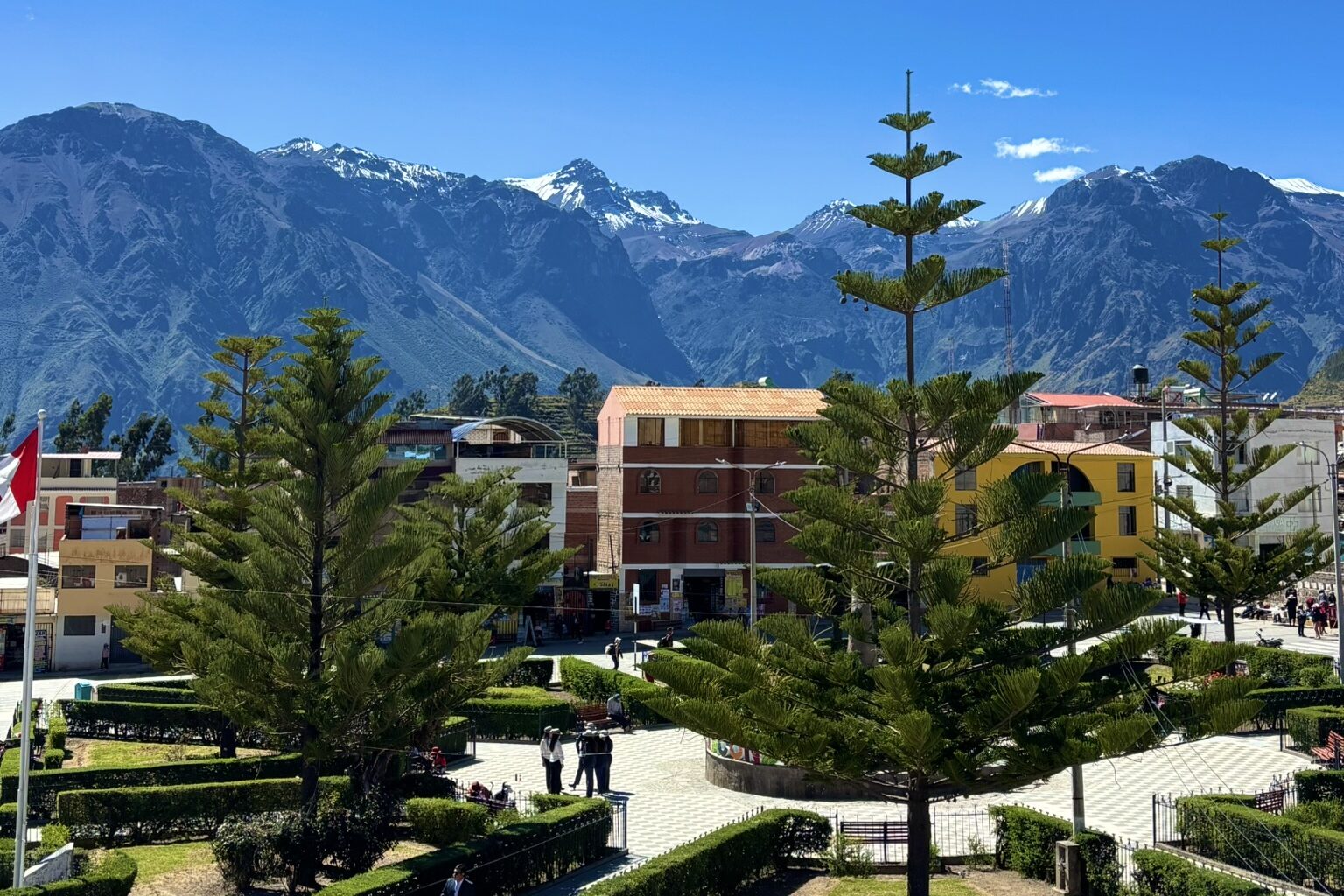
We took the early morning bus from Arequipa at 3:30 AM and arrived in Cabanaconde around 9:30 AM.
After having lunch and taking some time to relax, we checked in at Cabanaconde Backpackers. We stayed in a private room with breakfast included for 40 soles per person, which was very reasonable. One of the best things about this hostel was that they allowed us to leave our extra luggage there for free during the trek, and they also kindly let us take a free shower after finishing the trek on the final day.
Day 1: Cabanaconde → Llahuar
Distance: 12.6 km
Elevation change: Approximately 1,000 m descent
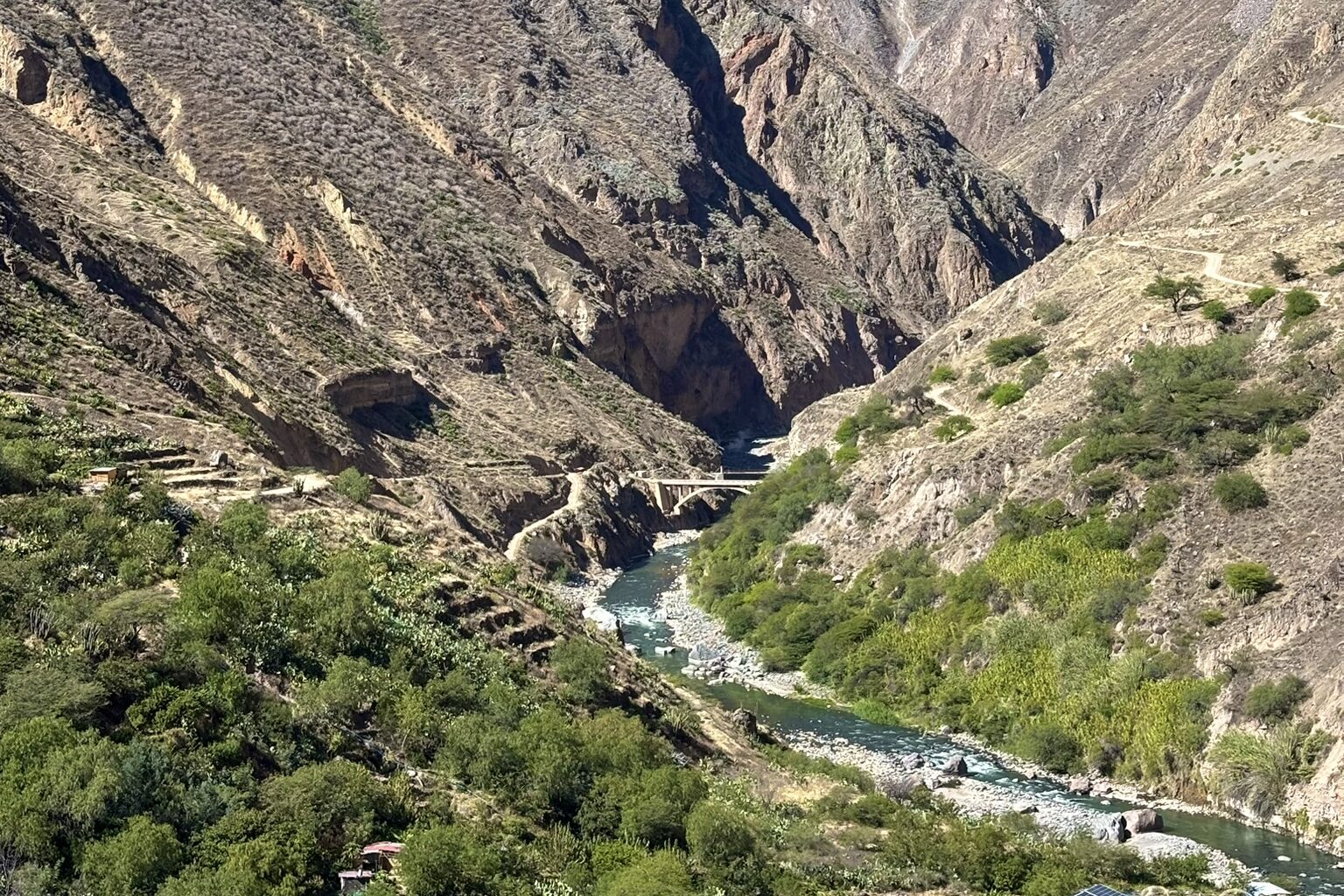
The biggest challenge of the Colca Canyon Trek is not necessarily the elevation — it’s the strong sun exposure. Most of the route has very little shade, so starting early is highly recommended to avoid the intense midday heat.
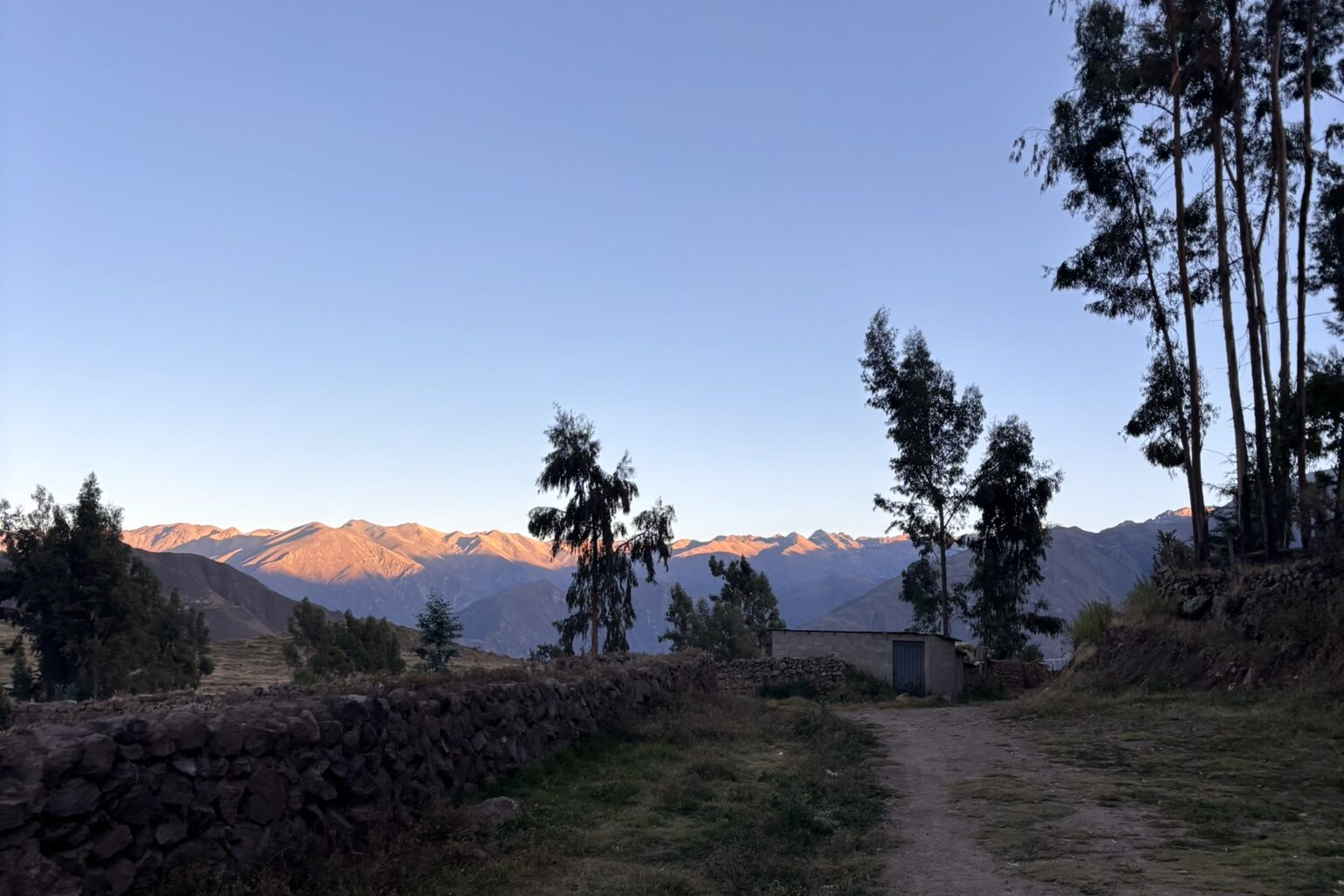
We started hiking at around 6:30 AM. Walking through the cool morning air, we watched the first sunlight slowly illuminate the canyon walls. The scenery changed beautifully as the sun moved higher, and we immediately felt that waking up early had been worth it.
As we approached deeper into the canyon, we spotted three wild Andean condors flying above us. Watching these enormous birds glide effortlessly through the sky with their huge wings spread wide was one of the most memorable moments of the entire trek.
After that, we continued descending along rocky paths, passing small villages and crossing suspension bridges. Around 10:30 AM, we finally arrived at Llahuar, our destination for the day. Surprisingly, we were the first hikers to arrive at our accommodation.
📍Where we stay
We stayed at Casa Virginia.
- Private room with breakfast (queen bed): 60 soles
- Dinner: 20 soles per person
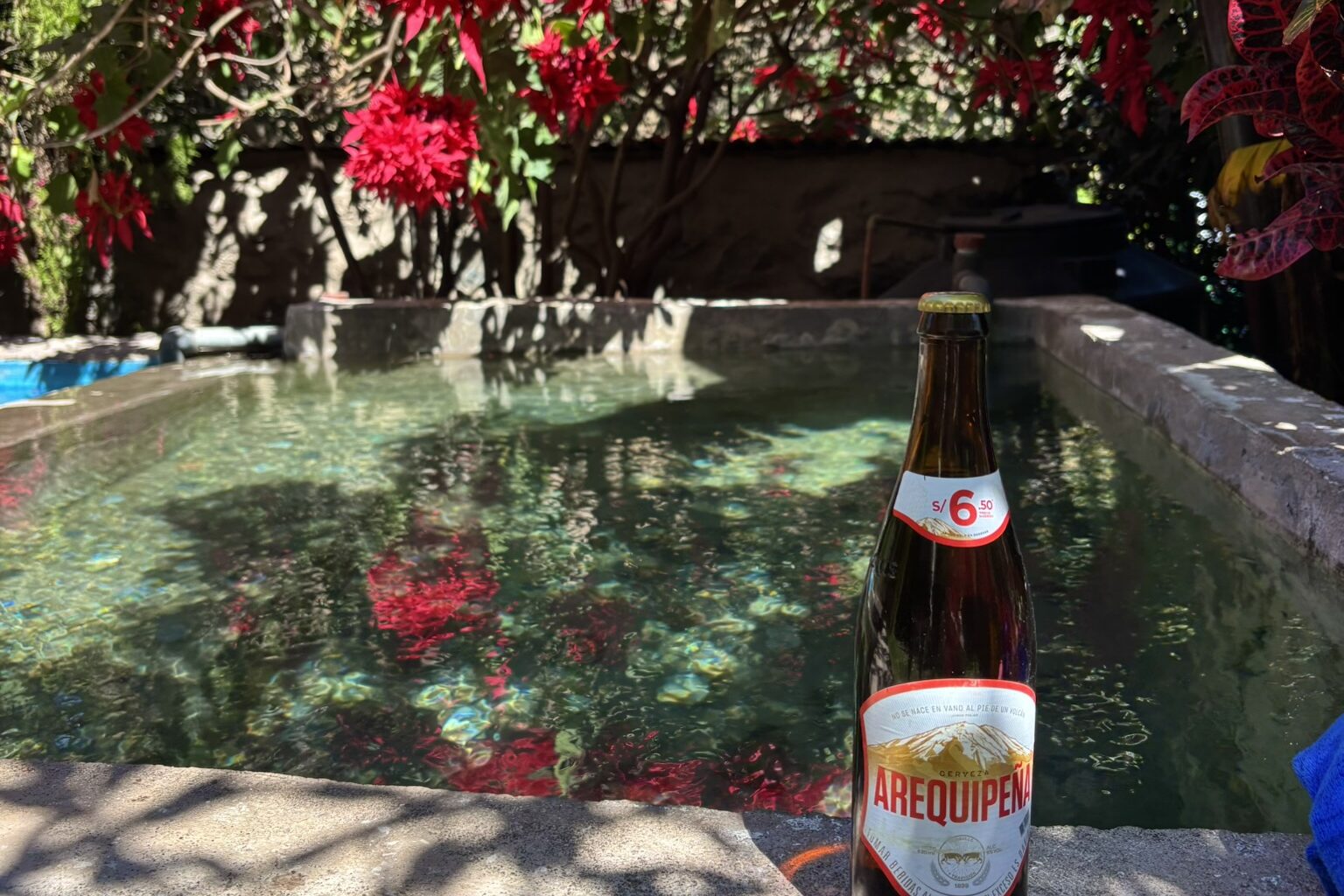
The guesthouse is located halfway down the canyon, with a beautiful view of the river from the terrace.
The biggest surprise was that the accommodation has its own natural hot spring pool. The water was a little lukewarm, but after descending 1,000 meters, soaking in the hot spring was the perfect reward. Relaxing in the warm water with a beer in hand, surrounded by the massive canyon walls, was an unforgettable experience.
The area around the guesthouse was peaceful and full of nature. There were fruit trees such as lemons, bananas, and passion fruit, and chickens freely wandered around the property.
Dinner was simple but satisfying: soup followed by chicken, potatoes, and rice. After a long day of hiking, it was exactly what we needed.
Day 2: Llahuar → Sangalle Oasis
Distance: Approximately 9.5 km
Elevation gain: Approximately 800 m
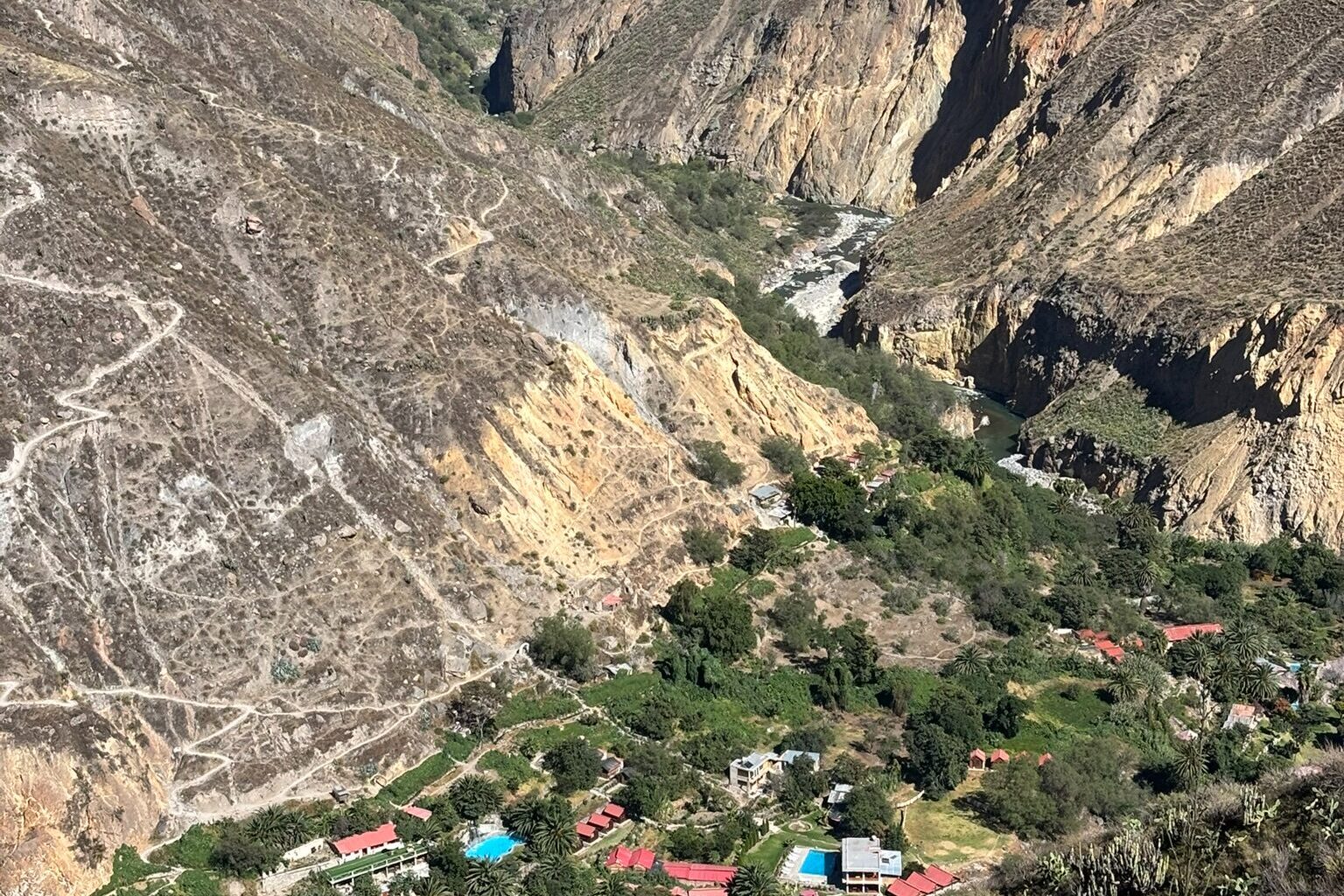
Our destination on Day 2 was Sangalle, a lush green oasis located deep inside Colca Canyon. Known as the “oasis,” Sangalle is one of the highlights of the Colca Canyon Trek and a popular place for hikers to stay overnight.
Many hikers continue further to San Juan de Chuccho, but since we had just completed the Salkantay Trek and still felt a little tired, we decided to take it slow and hike only as far as Sangalle.
We had pancakes for breakfast at 6:30 AM and started hiking around 7:00 AM. Compared with the first day, this section had much more shade, making it much more comfortable to walk. Personally, this was my favorite section of the entire trek.
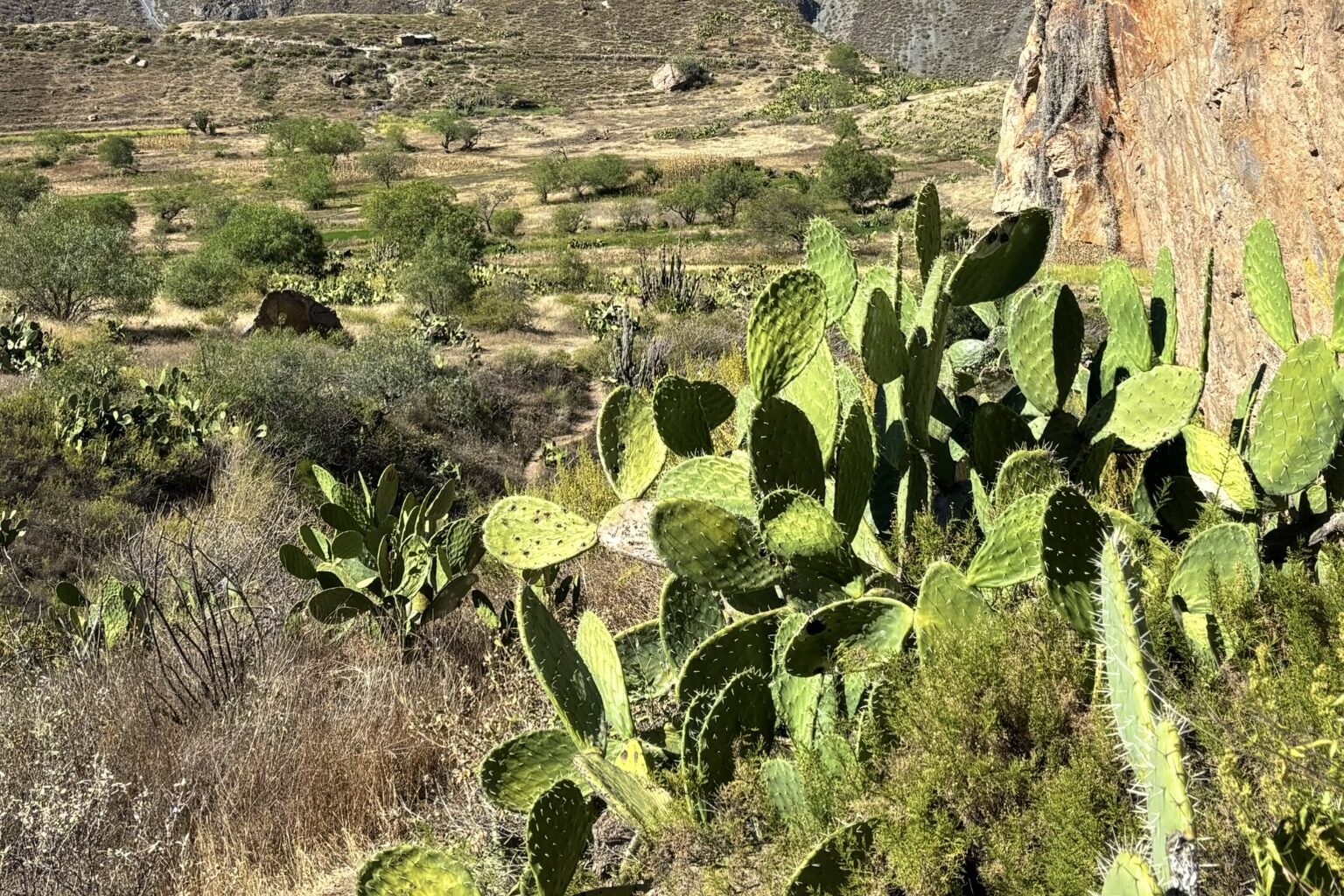
The scenery changed constantly along the way, from small traditional villages and narrow cliffside trails overlooking the canyon to hillsides covered with towering cacti. Every few minutes, the landscape looked completely different. (Unfortunately, I stepped on a cactus spine and got some stuck in my foot!)
After a final steep descent, we finally reached Sangalle around 11:30 AM. Seeing the green oasis suddenly appear at the bottom of the enormous canyon was an unforgettable sight.
📍Where we stay
We stayed at Oasis Paraiso Ecolodge.
- Private bungalow
- Breakfast included
- 40 soles per person
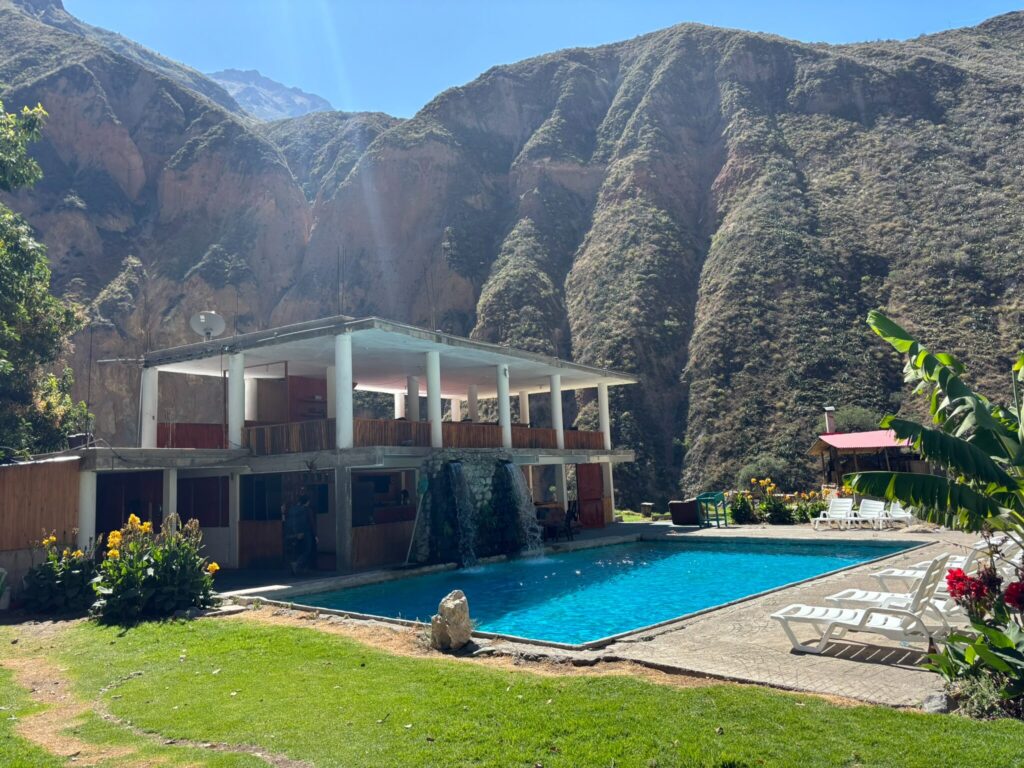
The lodge has a large swimming pool, and once again, we were the first guests to arrive. We had the entire pool to ourselves. Swimming while surrounded by the massive canyon walls was such a unique and luxurious experience. It became one of our favorite memories from the entire trek.
Dinner at the lodge was 30 soles, which felt slightly expensive, so we decided to make our own meal using the tuna and cheese we had brought with us, wrapped in tortillas.
Day 3: Sangalle → Cabanaconde
Distance: Approximately 6 km
Elevation gain: Approximately 1,000 m
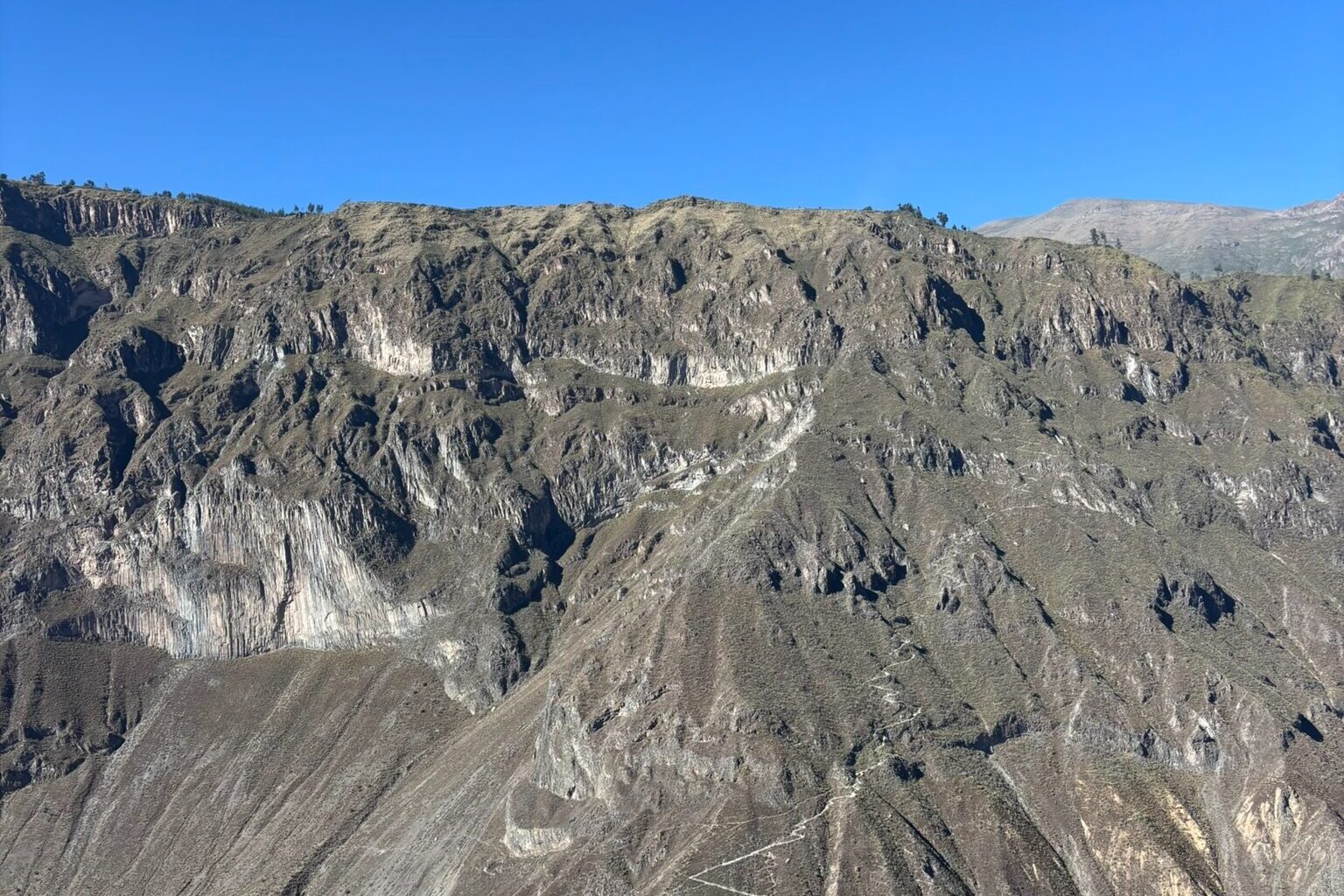
The final day had arrived. And this was the biggest challenge of the entire trek. To return to Cabanaconde, we had to climb all the way from the bottom of the canyon back to the top — gaining around 1,000 meters of elevation in just 6 km.
We woke up at 4:30 AM, had breakfast (bread and eggs) at 5:00 AM, and started hiking at 5:30 AM with our headlamps on. It was still completely dark when we started. About 30 minutes later, the sky began to brighten. Luckily, the mountains on the opposite side blocked the morning sun, allowing us to hike most of the climb in the shade. Even so, the climb was much harder than expected. The trail was steep, with loose sand and large rocks making every step difficult. The endless uphill sections were physically exhausting.
Finally, around 9:30 AM, we reached the top of the canyon. I was completely exhausted, but the feeling of accomplishment was even stronger.
After returning to Cabanaconde, we went back to our hostel, where the staff kindly allowed us to take a free shower. The hostel staff also helped us arrange an 11:00 AM bus back to Arequipa, marking the end of our incredible three-day adventure.
Accommodation Summary
During the Colca Canyon Trek, you will stay in small villages located deep inside the canyon. These are the three places where we stayed:
| Location | Accommodation | Price |
|---|---|---|
| Cabanaconde | Cabanaconde Backpackers | 40 soles/person (private room with breakfast) |
| Llahuar | Casa Virginia | 60 soles/private room (breakfast included) |
| Sangalle | Oasis Paraiso Ecolodge | 40 soles/person (private bungalow with breakfast) |
All of the accommodations are simple, but they are more than enough for resting after a long day of hiking. The natural hot spring pool at Casa Virginia in Llahuar and the swimming pool at Oasis Paraiso Ecolodge in Sangalle are definitely some of the highlights of this trek. Being able to relax in a hot spring or swim in a pool while surrounded by the dramatic canyon landscape is an experience you won’t find on many other treks in Peru.
Colca Canyon Trek Packing Tips & Things to Know
1. Start Early
The sun in Colca Canyon is extremely strong, and many sections of the trail have little to no shade, especially when descending into the canyon. Starting your hike early in the morning is highly recommended to avoid the hottest hours of the day.
2. Bring Enough Water
You can buy water in some villages along the route, but there are sections where you won’t find any shops or refill points for several hours. Especially during the warmer months, carrying at least 2–3 liters of water is a good idea.
3. Sun Protection Is Essential
Because of the high altitude and strong sunlight, sunscreen, a hat, and sunglasses are must-have items. Even if the temperature doesn’t feel extremely hot, you can still get badly sunburned after spending many hours hiking under the sun.
4. Bring Enough Cash
Most small villages inside Colca Canyon do not accept cards. Most small villages inside Colca Canyon do not accept credit cards, so be sure to bring enough cash to cover your accommodation, meals, drinks, and snacks.
5. Bring a Swimsuit
One of the best parts of this trek is being able to enjoy natural hot springs and swimming pools in Llahuar and Sangalle. Relaxing in warm water after a long day of hiking is the perfect reward and one of the unique experiences of the Colca Canyon Trek.
6. Trekking Poles Are Helpful
Trekking poles are highly recommended, as they reduce pressure on your knees during steep descents and provide better balance on loose gravel, slippery trails, and the long final climb. We found them especially helpful on the steep sections.
Is the Colca Canyon Trek Worth It?
Absolutely. The Colca Canyon Trek offers a completely different experience from Peru’s famous Santa Cruz Trek and Salkantay Trek.
Instead of glaciers and snow-capped peaks, the Colca Canyon Trek offers a completely different landscape, featuring dramatic desert-like canyons, lush oasis villages hidden deep in the valley, traditional local communities, natural hot springs, and the chance to spot wild Andean condors soaring overhead.
Another advantage is that it is generally less crowded and more affordable compared with the famous trekking routes around Machu Picchu.
Starting with a descent through a dry, desert-like canyon, reaching a hidden oasis deep in the valley, and finally climbing 1,000 meters back up on your own feet. If you’re looking for a trek where you can experience both incredible scenery and a true sense of achievement, be sure to consider the Colca Canyon Trek as part of your Peru adventure.